

Benefits Of SEO
Boost Your Visibility: Why SEO + Google My Business Is the Power Combo Your Brand Needs in 2025. If you're running a business and not showing up on Google, are you even really in business? In today’s scroll-fast-buy-faster world, SEO and your Google Business Profile are like the dynamic duo that can take your brand from invisible to unmissable. Whether you're selling products, services, or just trying to get your name out there—this combo is the game-changer you didn’t know you needed. What’s SEO and Why Should You Care? SEO (Search Engine Optimization) is what helps your website pop up on Google before your competitors do. Good SEO = more eyeballs = more clicks = more cash. Period. Here’s what SEO does for you: Gets your biz on page 1 of Google (because let’s be real, who clicks page 2?) Brings in high-quality traffic—aka people who are already searching for what you do Builds trust and credibility online (if Google likes you, customers will too) Works 24/7 so even while you're bingeing Netflix, your website is working overtime Google My Business Profile = Local SEO’s Secret WeaponNow, let’s talk about your Google Business Profile (formerly Google My Business). If you're not using it... you're literally leaving money on the map. Benefits of claiming and optimizing your GMB profile: You show up in Google Maps + local pack (hello, foot traffic and local leads) People can call, visit, or DM you straight from Google Boosts your SEO with verified business details + customer reviews Lets you post updates, offers, and photos directly to your search profile Basically, it’s your digital shopfront—for free. And it works damn hard when you treat it right. The Bottom Line SEO and Google My Business aren't just “nice-to-haves” anymore—they’re non-negotiables. Whether you're just starting or scaling up, investing time in these two tools will get you seen, heard, and chosen. Need help setting it up, optimizing your profile, or ranking better in search? 👉 Let’s Talk — our team at Teamworks can help you build a powerful presence that actually converts. https://www.teamworks.design/contact
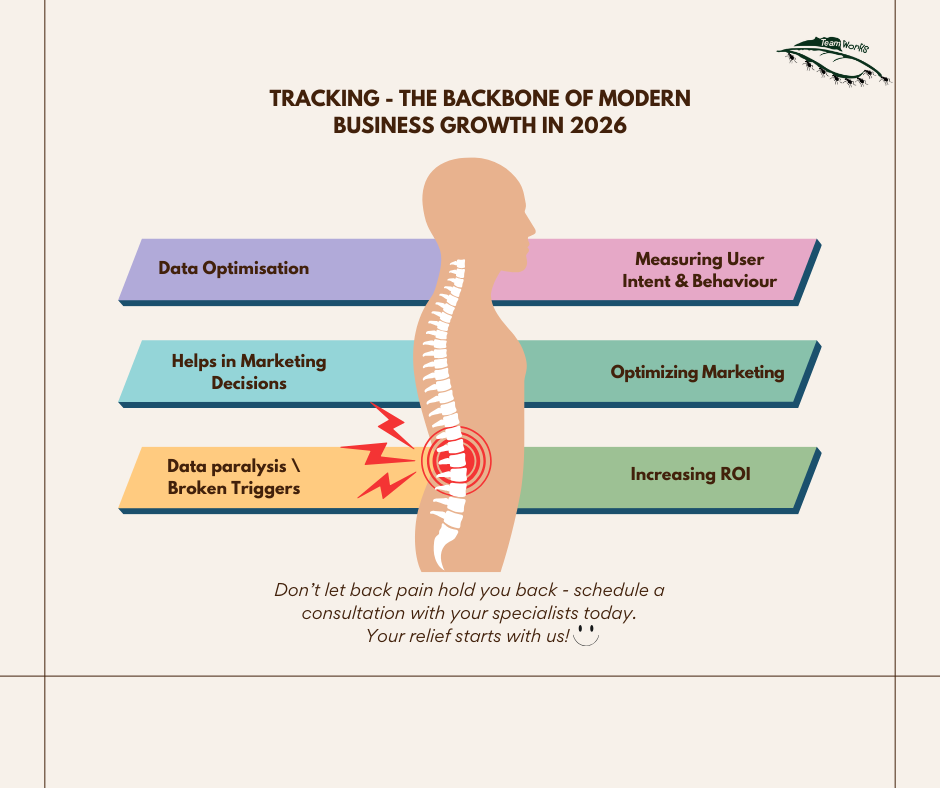
Your analytics might need a chiropractor
Your Tracking Might Need a Chiropractor --- Here’s How to Fix It1. Enhancing User Experience (UX) and UsabilityWebsite tracking helps identify friction points that cause visitors to leave. Behavioral Analytics: Tools like heatmaps (tracking clicks, scrolls, and mouse movements) and session replays allow webmasters to see how users interact with pages.Bug Detection: Tracking helps identify technical issues or broken elements, allowing for quicker fixes that prevent frustration.Personalisation: First-party tracking allows websites to remember user preferences, such as login details or items left in a shopping cart. 2. Optimising Marketing and Increasing ROITracking is crucial for measuring the effectiveness of marketing efforts to avoid wasting budget. Traffic Source Analysis: Identifying where visitors come from (organic search, social media, paid ads) helps to focus budget on the most effective channels.Conversion Optimisation: Tracking identifies bottlenecks in the sales funnel—such as where users abandon their shopping cart—allowing for optimisations that increase sales.Retargeting: Tracking allows businesses to show targeted ads to users who previously visited their site, increasing the likelihood of conversion. 3. Data-Driven Decision MakingInstead of relying on guesswork, website tracking provides concrete data to inform business strategy. Content Strategy: Understanding which pages are most visited and which content keeps users engaged helps in creating more of what works.SEO Insights: Knowing the search terms and user intent behind visits helps improve search engine ranking and visibility. 4. Security and Fraud DetectionTracking is vital for monitoring for malicious activity. Bot Detection: Identifying unusual patterns in behavior helps detect bot traffic.Fraud Prevention: Monitoring for suspicious logins or fraudulent activity protects both the business and its users. 5. Regulatory ComplianceWhile tracking gathers data, it also helps businesses comply with privacy regulations. Consent Management: Modern tracking tools (like cookie banners) help manage user consent to comply with laws like GDPR and CCPA, which is necessary to avoid significant fines. Key Tracking Methods in 2026First-Party Cookies: Essential for site functionality and personalisation.Tracking Pixels/Web Beacons: Invisible images used to monitor email opens and page views.Server-Side Tracking: A growing trend in 2025-2026, where data is collected directly from the server, improving data accuracy and bypassing browser-level restrictions.Browser Fingerprinting: A method that uses unique device characteristics to track behavior without cookies. In short, not tracking a website today is likened to "navigating without a map". It is no longer just about counting visitors, but understanding their journey to improve business. Check your web back pain… your analytics might need a chiropractor Don't delay, book a consultation with your doctor today : https://www.teamworks.design/home
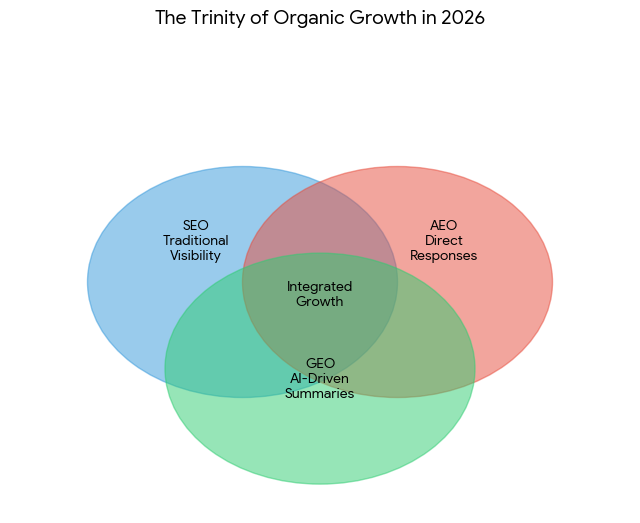
In 2026, search behaviour has evolved
In 2026, search behaviour has evolved beyond traditional SEO. Here are two additional formats that will impact your organic strategy moving forward : 1. Traditional SEO : The Foundation (Search Engine Marketing) Even in 2026, the core of organic growth remains a technically sound website. *Topical Authority: Instead of single keywords, focus on "topic clusters" that show deep expertise in real estate or property management. *E-E-A-T: Establish "Experience, Expertise, Authoritativeness, and Trustworthiness" through verified author bios and original research. 2. AEO: Winning : (Answer Engine Optimisation) AEO targets users looking for fast, factual answers without clicking through. *Direct Questioning: Use a Q&A format (e.g., "What are the benefits of property investment in Australia ?" to capture featured snippets. *Structured Data: Implement Schema Markup (FAQ, LocalBusiness) to help engines identify your content as a direct answer. 3. GEO: Influencing AI Narratives - Generative Engine Optimisation GEO focuses on how generative AI models reuse your information. *Citations & Sources: AI models prefer data-rich content with unique statistics or expert quotes. *Brand Presence: Mention your business across high-authority platforms (social media, industry forums) so AI "sees" you as a trusted entity across the web. #seostrategies2026 #teamworksdesignGet a detailed SEO stress test of your business today: https://www.teamworks.design/homeDelivered Projects : https://www.teamworks.design/our-work
Teamworks Insights / Local SEO & Brisbane Market Trends
Local Businesses Flourish in Carseldine & Brisbane's Northern Suburbs | Teamworks :root{ --brick:#a8462f; --brick-deep:#7d3222; --jacaranda:#5b4a8a; --eucalyptus:#3f5a44; --paper:#f3ede2; --paper-warm:#ece2d0; --ink:#241f1a; --ink-soft:#5b5449; --line:#d8cbb4; } *{box-sizing:border-box;} html{scroll-behavior:smooth;} body{ margin:0; background:var(--paper); color:var(--ink); font-family:'Source Sans 3', sans-serif; -webkit-font-smoothing:antialiased; line-height:1.6; } .wrap{max-width:860px;margin:0 auto;padding:0 24px;} /* ---------- HERO ---------- */ header.hero{ position:relative; padding:64px 0 48px; border-bottom:2px solid var(--ink); overflow:hidden; } header.hero::before{ content:""; position:absolute; top:-120px; right:-140px; width:420px;height:420px; background:radial-gradient(circle, rgba(91,74,138,0.16) 0%, rgba(91,74,138,0) 70%); } .eyebrow{ display:flex;align-items:center;gap:10px; font-family:'JetBrains Mono', monospace; font-size:12.5px;letter-spacing:.09em;text-transform:uppercase; color:var(--brick-deep);font-weight:500; margin-bottom:22px; } .eyebrow .dot{width:7px;height:7px;border-radius:50%;background:var(--brick);} h1{ font-family:'Fraunces', serif; font-weight:600; font-size:clamp(2.2rem, 5vw, 3.4rem); line-height:1.06; letter-spacing:-0.01em; margin:0 0 22px; color:var(--ink); } h1 em{font-style:italic;color:var(--brick);} .dek{ font-size:1.15rem; color:var(--ink-soft); max-width:56ch; margin:0 0 28px; } .meta-row{ display:flex;flex-wrap:wrap;gap:22px; font-family:'JetBrains Mono', monospace; font-size:12px;color:var(--ink-soft); padding-top:20px;border-top:1px solid var(--line); } .meta-row strong{color:var(--ink);font-weight:600;} /* ---------- BODY ---------- */ main{padding:44px 0 8px;} p.lede{ font-family:'Fraunces', serif; font-size:1.28rem; font-weight:400; line-height:1.55; color:var(--ink); margin:0 0 34px; } p.lede::first-letter{ font-size:3.6em;float:left;line-height:0.85; padding:6px 10px 0 0; font-weight:700;color:var(--brick); } article p{ font-size:1.04rem; color:#3a352d; margin:0 0 26px; max-width:68ch; } article a{color:var(--brick-deep);text-decoration-thickness:1px;} article strong{color:var(--ink);font-weight:600;} /* ---------- STAT STRIP ---------- */ .stat-strip{ display:grid; grid-template-columns:repeat(4,1fr); gap:1px; background:var(--ink); border:1px solid var(--ink); margin:38px 0 42px; } .stat-cell{ background:var(--paper-warm); padding:22px 16px; text-align:left; } .stat-num{ font-family:'Fraunces', serif; font-weight:700; font-size:1.9rem; color:var(--brick-deep); line-height:1; margin-bottom:8px; } .stat-label{ font-family:'JetBrains Mono', monospace; font-size:10.5px; letter-spacing:.03em; color:var(--ink-soft); text-transform:uppercase; line-height:1.4; } /* ---------- CHART ---------- */ .chart-block{ margin:42px 0; border:1px solid var(--line); background:#fbf8f2; padding:28px 28px 20px; } .chart-title{ font-family:'JetBrains Mono', monospace; font-size:11px;letter-spacing:.07em;text-transform:uppercase; color:var(--ink-soft);margin-bottom:4px; } .chart-sub{ font-family:'Fraunces', serif; font-size:1.25rem;font-weight:600; color:var(--ink);margin-bottom:18px; } .chart-caption{ font-size:12.5px;color:var(--ink-soft); margin-top:10px;font-family:'JetBrains Mono', monospace; } /* ---------- PULLQUOTE ---------- */ .pullquote{ border-left:3px solid var(--jacaranda); padding:4px 0 4px 24px; margin:38px 0; } .pullquote p{ font-family:'Fraunces', serif; font-style:italic; font-size:1.3rem; color:var(--ink); margin:0; } .pullquote span{ display:block; font-family:'JetBrains Mono', monospace; font-size:11px;color:var(--ink-soft); margin-top:10px;font-style:normal; } /* ---------- CTA ---------- */ .cta{ margin:52px 0 20px; background:var(--ink); color:var(--paper); padding:38px 34px; display:flex; justify-content:space-between; align-items:center; gap:24px; flex-wrap:wrap; } .cta h3{ font-family:'Fraunces', serif; font-weight:600; font-size:1.5rem; margin:0 0 8px; color:#fff; } .cta p{margin:0;color:#c9c2b4;font-size:.98rem;max-width:42ch;} .cta-btn{ flex-shrink:0; display:inline-flex;align-items:center;gap:10px; background:var(--brick); color:#fff; font-family:'JetBrains Mono', monospace; font-size:13px;font-weight:500;letter-spacing:.02em; text-decoration:none; padding:14px 22px; transition:background .15s ease; } .cta-btn:hover{background:var(--brick-deep);} .cta-btn svg{width:14px;height:14px;} /* ---------- TAGS / FOOTER ---------- */ .tags{ display:flex;flex-wrap:wrap;gap:8px; margin:36px 0 8px; } .tag{ font-family:'JetBrains Mono', monospace; font-size:11px;color:var(--ink-soft); border:1px solid var(--line); padding:6px 12px; background:var(--paper-warm); } footer{ border-top:2px solid var(--ink); margin-top:40px; padding:26px 0 50px; display:flex;justify-content:space-between;align-items:center;flex-wrap:wrap;gap:12px; } footer .brand{ font-family:'Fraunces', serif;font-weight:700;font-size:1.05rem;color:var(--ink); } footer .src{ font-family:'JetBrains Mono', monospace;font-size:11px;color:var(--ink-soft); max-width:50ch; } @media (max-width:640px){ .stat-strip{grid-template-columns:repeat(2,1fr);} .cta{flex-direction:column;align-items:flex-start;} } Teamworks Insights / Local SEO & Brisbane Market Trends Local Businesses Flourish in Carseldine and Brisbane's Northern Suburbs A wave of construction, population growth and rising incomes is turning Brisbane's north into one of the city's most promising corridors for local business — and local search. Published July 2026 Read time 4 min By Teamworks Digital Marketing Agency, Brisbane Sixteen kilometres north of the Brisbane CBD, the suburb of Carseldine is quietly becoming a case study in how infrastructure and population growth translate into commercial opportunity — and it's far from alone. Across Brisbane's northern corridor, from Aspley and Bald Hills to Chermside and Bridgeman Downs, local businesses are riding a genuine growth cycle. The numbers tell the story. Median house values in Carseldine have climbed 12.95% over the past year to $1,242,500, while units have jumped 15.3%, according to CoreLogic-sourced data — among the strongest growth rates in Brisbane's north. Homes are moving fast too, spending an average of just 13 days on market, with rental vacancy sitting at a razor-thin 0.86%. For local business owners, tight housing markets and fast-selling stock are reliable leading indicators: they signal population inflow, rising household spending power and steady foot traffic for years to come. That growth is being matched by serious investment in bricks and mortar. The $87 million Carseldine Village Heart development — a 5-Star Green Star precinct anchored by an IGA supermarket, medical centre, pharmacy and gym around a landscaped public plaza — is generating roughly 200 construction jobs and around 140 ongoing roles once trading begins. It's part of a broader 15-hectare urban renewal on the former QUT Carseldine campus that will ultimately deliver more than 600 dwellings by 2028, alongside a nearby government office precinct already employing about 900 workers and a rail station connecting the suburb straight into Brisbane's network. Add Brisbane City Council's citywide figures — almost 146,000 registered businesses, a labour force nearing 850,000 people and a Gross Regional Product of roughly $225 billion — and the north's slice of that growth looks increasingly hard to ignore. For the cafés, trades, clinics and retailers setting up in this corridor, the opportunity is real — but so is the competition. Carseldine's median household income already sits above the Greater Brisbane average, and new residents arriving through Village Heart and the wider Fitzgibbon Priority Development Area will be searching online before they ever walk through a door. That's where local SEO becomes the difference between a business that gets discovered and one that gets scrolled past. Teamworks, a Brisbane-based digital marketing agency, works with local businesses across the northern suburbs to build the search visibility, Google Business Profile authority and content strategy needed to convert this growth into customers — you can see how on our Brisbane SEO services page. 15.3% Annual growth, Carseldine unit values $87M Village Heart precinct investment 600+ New dwellings by 2028 146K Registered businesses across Brisbane Fig. 1 — Capital growth, past 12 months Carseldine is outpacing the Greater Brisbane average 0% 5% 10% 15% Gr. Brisbane avg ~8% Carseldine houses 12.95% Carseldine units 15.3% Source: CoreLogic-sourced suburb data, YIP & Atlaso market reports, 12 months to early 2026. "Growth corridors like Carseldine don't just need a shopfront — they need to be found. The businesses that invest in local search now will own the results page before the area finishes building out." — Teamworks, Local SEO & Growth Marketing, Brisbane Ready to capture Brisbane's north? Teamworks helps local businesses in Carseldine, Chermside, Aspley and across Brisbane's northern suburbs rank higher, get found faster and turn growth into customers. Explore Teamworks SEO Services #CarseldineBusiness #BrisbaneNorthernSuburbs #LocalSEOBrisbane #BrisbaneConstruction2026 #SmallBusinessGrowth #TeamworksDigital Teamworks — Digital Marketing Agency, Brisbane Source : Data: Brisbane City Council economic facts, CoreLogic/YIP, Atlaso market research, Queensland Government (EDQ), ASBFEO — accessed July 2026.
