
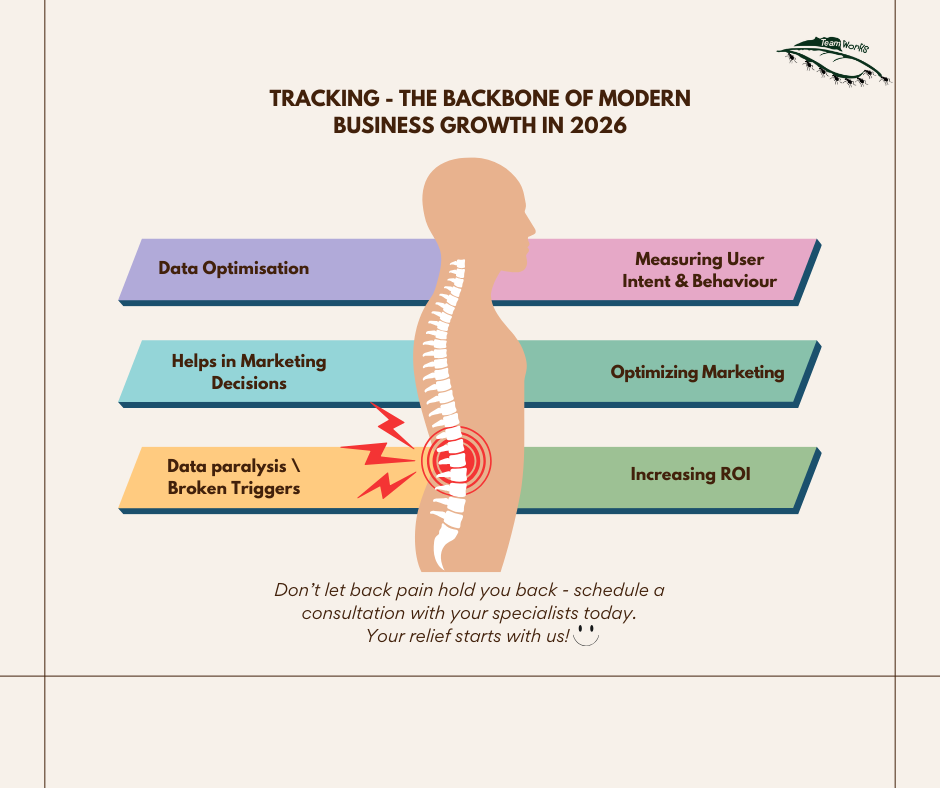

Your Tracking Might Need a Chiropractor --- Here’s How to Fix It
1. Enhancing User Experience (UX) and Usability
Website tracking helps identify friction points that cause visitors to leave.
Behavioral Analytics: Tools like heatmaps (tracking clicks, scrolls, and mouse movements) and session replays allow webmasters to see how users interact with pages.
Bug Detection: Tracking helps identify technical issues or broken elements, allowing for quicker fixes that prevent frustration.
Personalisation: First-party tracking allows websites to remember user preferences, such as login details or items left in a shopping cart.
2. Optimising Marketing and Increasing ROI
Tracking is crucial for measuring the effectiveness of marketing efforts to avoid wasting budget.
Traffic Source Analysis: Identifying where visitors come from (organic search, social media, paid ads) helps to focus budget on the most effective channels.
Conversion Optimisation: Tracking identifies bottlenecks in the sales funnel—such as where users abandon their shopping cart—allowing for optimisations that increase sales.
Retargeting: Tracking allows businesses to show targeted ads to users who previously visited their site, increasing the likelihood of conversion.
3. Data-Driven Decision Making
Instead of relying on guesswork, website tracking provides concrete data to inform business strategy.
Content Strategy: Understanding which pages are most visited and which content keeps users engaged helps in creating more of what works.
SEO Insights: Knowing the search terms and user intent behind visits helps improve search engine ranking and visibility.
4. Security and Fraud Detection
Tracking is vital for monitoring for malicious activity.
Bot Detection: Identifying unusual patterns in behavior helps detect bot traffic.
Fraud Prevention: Monitoring for suspicious logins or fraudulent activity protects both the business and its users.
5. Regulatory Compliance
While tracking gathers data, it also helps businesses comply with privacy regulations.
Consent Management: Modern tracking tools (like cookie banners) help manage user consent to comply with laws like GDPR and CCPA, which is necessary to avoid significant fines.
Key Tracking Methods in 2026
First-Party Cookies: Essential for site functionality and personalisation.
Tracking Pixels/Web Beacons: Invisible images used to monitor email opens and page views.
Server-Side Tracking: A growing trend in 2025-2026, where data is collected directly from the server, improving data accuracy and bypassing browser-level restrictions.
Browser Fingerprinting: A method that uses unique device characteristics to track behavior without cookies.
In short, not tracking a website today is likened to "navigating without a map". It is no longer just about counting visitors, but understanding their journey to improve business.
Check your web back pain… your analytics might need a chiropractor
Don't delay, book a consultation with your doctor today : https://www.teamworks.design/home
